
Roof Repair Services in Phoenix: What You Need to Know
Phoenix sun, wind and monsoon rain age a roof fast. Here is what roof repair covers, what it costs to plan for, and when a small leak stops being small.
Phoenix roofs work harder than most. Sun, wind and monsoon rain age them faster than the same roof would age in a milder city.
This guide covers the repair work on offer, what drives the price, and when a leak needs a crew on the roof that day.
The roof work Phoenix homes usually need
Most local roof jobs fall into a few buckets. Which one you need depends on the age of the roof, the damage, the material and your budget.
- Roof inspections. A close look at the roof to catch small faults before they spread.
- Roof repairs. Fixing leaks, cracked tiles, worn shingles and failed flashing.
- Full replacement. Stripping the roof and starting over once repairs stop holding.
- Commercial roofing. Larger and flat systems, with code and warranty rules of their own.
What drives the price of a roof repair
Price tracks the size of the job more than anything else. Materials and access matter too. Better materials often cost more now and less over the life of the roof.
- Scope. A patch costs far less than a full tear-off.
- Material. Tile, shingle and membrane roofs price differently and last different lengths of time.
- Access and slope. A steep or awkward roof takes longer and needs more safety gear.
- Roof age. An old roof often needs extra work once the crew opens it up.
Ask for an itemized quote that splits materials from labor. Two bids are easy to compare that way.
Why a professional inspection is worth booking
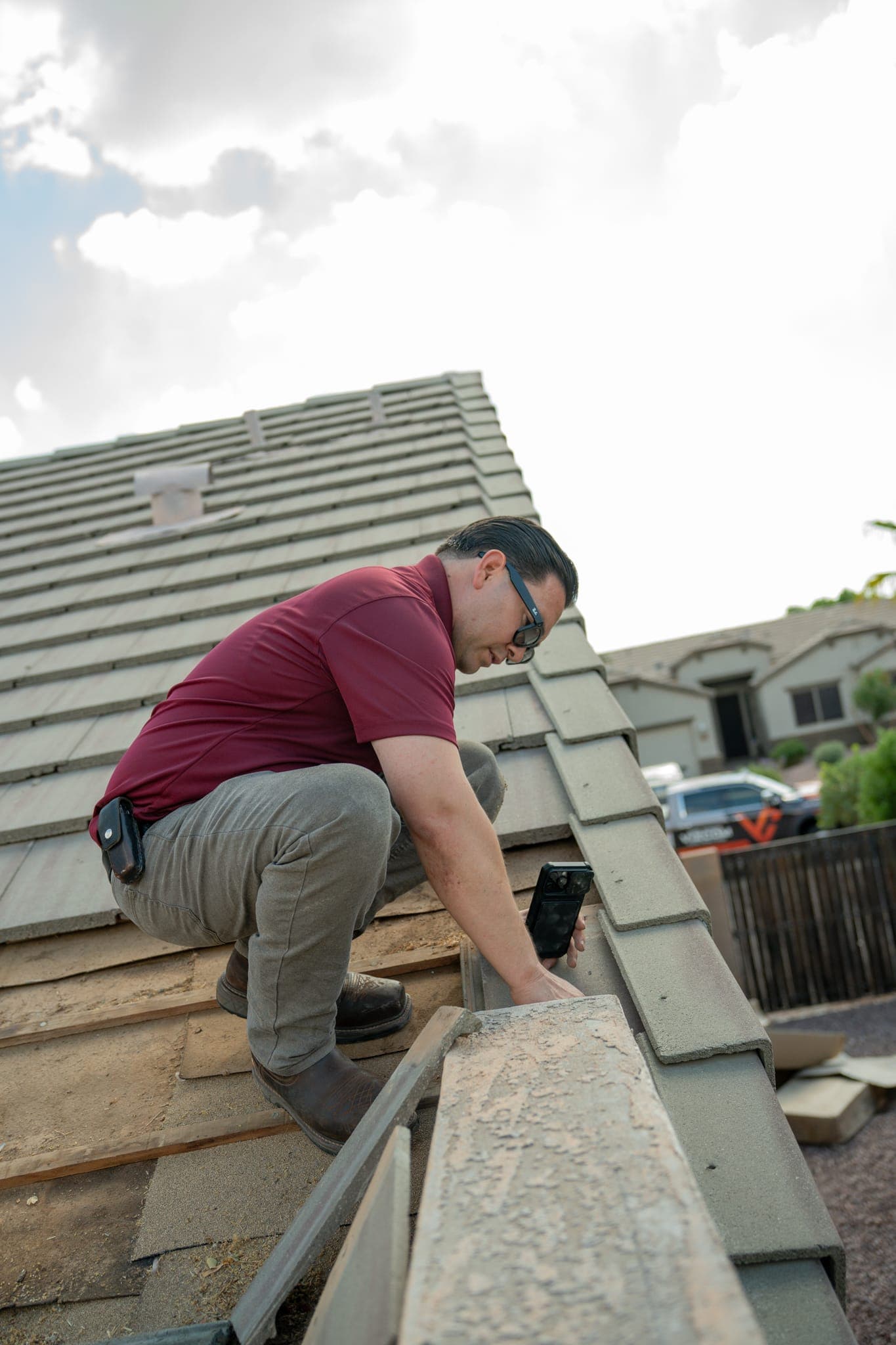
An inspector sees what you cannot see from the ground. The written report also gives you something to hand an insurance adjuster.
What an inspection covers
- Surface condition of the tile, shingle or membrane.
- The deck, rafters and any framing in view.
- Flashing around vents, chimneys and skylights.
- Gutters and drainage.
- Signs of water getting in, outside and inside.
How often to book one
Once a year is the baseline. Book another after a monsoon storm or high winds. Check an older roof more often than that.
What inspections usually turn up
- Cracked, loose or missing tiles and shingles.
- Stains or damp patches on ceilings and walls.
- Granules from asphalt shingles piling up in the gutters.
- Flashing that has lifted or pulled away from its seal.
What a free inspection gets you
A free inspection puts a real assessment in your hands at no cost. You can rank the repairs, budget for them, and decide what has to happen now.
- A written record of the roof as it stands today.
- A repair list you can price and plan around.
When roof repair cannot wait
Some damage needs a crew on the roof quickly. Water moving through a ceiling does more harm every hour it runs.
- A large section of tile or shingle is gone and the underlayment is exposed.
- Water drips inside while it rains.
- A ceiling stain is spreading.
- A storm left visible damage, or debris hit the roof.
Stabilizing the roof early keeps a small repair from turning into a replacement. It also limits the interior damage you pay to fix later.
Restoration and commercial roof options
Not every worn roof needs replacing. The right call depends on the condition, how long you plan to keep the building, and your budget.
- Targeted repair. Fix the failing areas and buy the roof more years.
- Full restoration. Replace materials and correct insulation and ventilation at the same time.
- Commercial systems. Flat and low-slope roofs with their own warranty terms.
- Replacement. Start over once the deck or the underlayment is past saving.
Paying for the work
Start with a clear scope, then get itemized quotes from more than one contractor. Compare labor, materials and warranty terms, not just the total at the bottom.
- Home improvement loans for a full replacement.
- Credit for smaller repairs.
- Payment plans, where the contractor offers them.
- An insurance claim, when a storm caused the damage.
Read the terms before you sign. Interest over the life of a loan can cost more than the gap between two bids.
Maintenance that keeps repairs small
- Book an inspection every year and after big storms.
- Fix leaks as soon as you spot them.
- Keep gutters and downspouts clear.
- Choose materials rated for Phoenix heat when you do replace.
Common questions
What should I do if I find a roof leak?
Catch the water, move anything valuable out of the way, and photograph the damage. Then call a roofing contractor to find the source. Waiting invites mold and structural damage.
How do I pick a roofing contractor in Phoenix?
Check the license and the insurance first. Read reviews, ask for references, and get an itemized estimate in writing. A clear proposal with warranty terms is a good sign.
Do better roofing materials pay off?
Usually. Higher grade materials hold up longer in heat and carry longer warranties. The cost per year of roof life often works out lower.
How often should I schedule an inspection?
Once a year, plus a check after any major storm. Older roofs and roofs with a known weak spot deserve a closer watch.
What damages roofs most in Phoenix?
Heat, wind and monsoon rain. Months of sun make materials brittle, wind lifts them, then heavy rain finds every gap that opened up.
Are roof repairs covered by a warranty?
Many contractors warranty their workmanship, and manufacturers warranty the materials. Ask what each one covers, how long it runs, and what voids it.
What should I think about before a full replacement?
Material choice for the heat, the total cost, local code, the contractor's record and the schedule. Line those up before work starts and there are fewer surprises.
- EPA Certified Firm
- IICRC Certified
- ROC #315042
- TRI Certified
Keep reading
Roofing Tips
Affordable Roofing Contractors in Phoenix: What to Expect
Affordable does not have to mean cheap work. Here is how Phoenix roofing quotes are built, which credentials to check, and the materials that hold up in the heat.
Roofing Tips
Monsoon Roof Prep: Five Checks Before the Storms Hit
Every summer the Valley braces for monsoon season, and unprepared roofs pay for it. Five checks you can run before the first storm, and what they tell you.
Demolition Services
Licensed Residential Demolition Companies: What to Check
An unlicensed crew is cheap until the stop-work order arrives. Here is what a licence covers, which permits apply, and how to vet a company.
Get your free inspection
Tell us what happened. We’ll call you back with a plan and a time we can be there.
Damage active right now? Call (623) 225-7898.